
Introduction: The Evolution of Façades
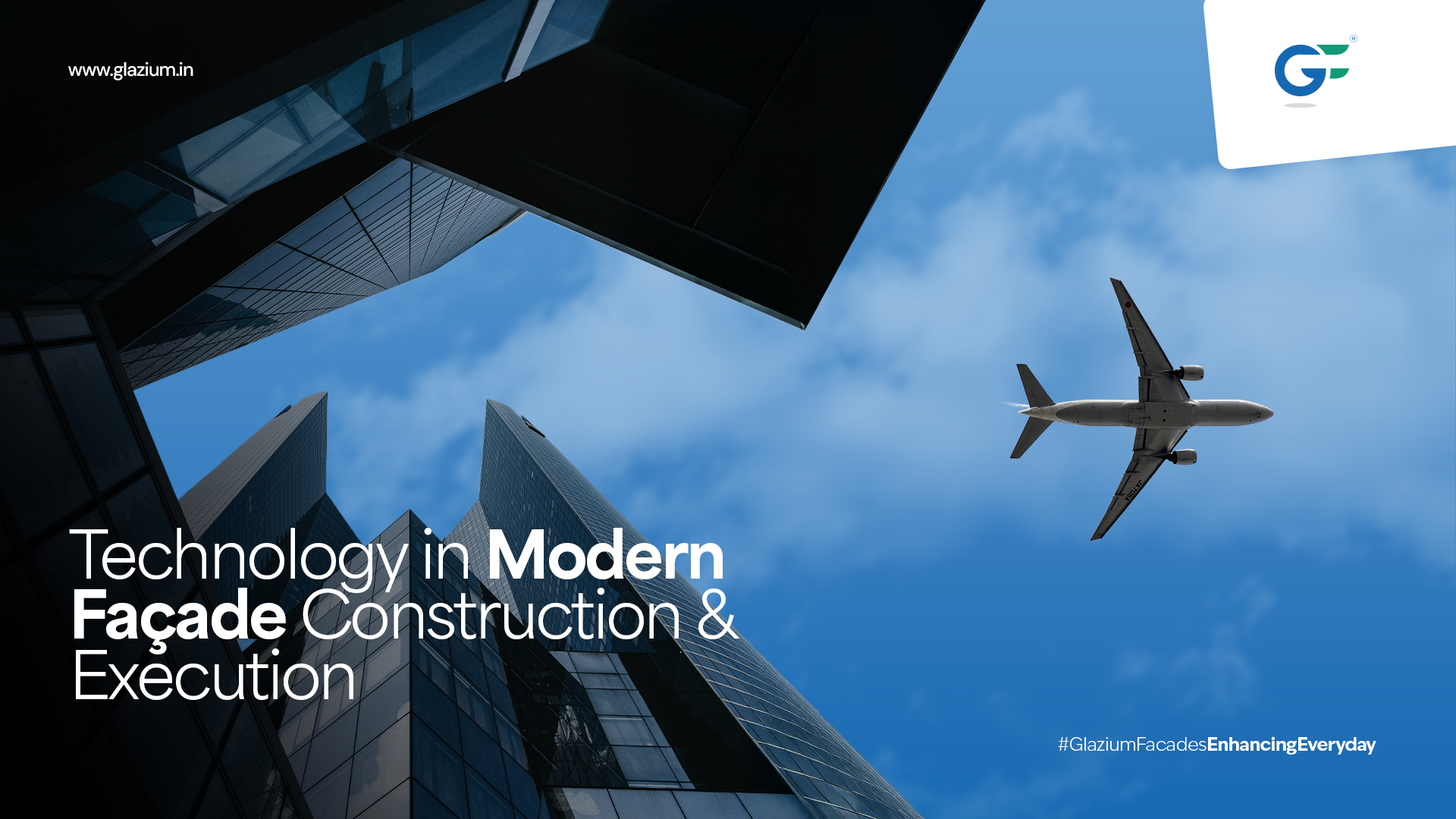
Façades are no longer just outer coverings of buildings. In modern construction, they play a critical role in energy efficiency, structural performance, occupant comfort, and architectural identity.
With the integration of new technologies, façade systems today are smarter, more precise, and more efficient to execute than ever before.
1. Digital Design & BIM Integration
One of the biggest advancements in façade construction is the use of Building Information Modeling. BIM allows architects, engineers, and contractors to:
• Visualize façade systems in 3D before construction
• Detect clashes between structure and façade elements
• Improve coordination between teams
This reduces errors during execution and ensures that façade systems are buildable and accurate from the design stage itself.2. Unitized Façade Systems
Modern buildings increasingly use unitized curtain wall systems, where façade panels are:
• Pre-fabricated in factories
• Pre-glazed and assembled under controlled conditions
• Installed quickly on site
This technology improves:• Speed of execution
• Quality consistency
• Safety during installation
It is widely used in high-rise commercial buildings across India and globally.3. Advanced Manufacturing & Automation
Façade construction today relies heavily on automated manufacturing technologies, such as:
• CNC machining
• Automated cutting and fabrication lines
• Precision assembly systems
These technologies ensure:• High accuracy
• Reduced material wastage
• Consistent quality across large-scale projects
Factory-controlled environments also allow better quality checks before materials reach the site.4. High-Performance Glass & Materials
Modern façades use advanced materials like:
• Double Glazed Units (DGU)
• Low-E (low emissivity) glass
• Laminated safety glass
These materials help:• Reduce heat gain
• Improve insulation
• Enhance energy efficiency
They also contribute to green building certifications like IGBC and LEED.5. Smart & Dynamic Façades
Technology has enabled façades to become responsive systems. Examples include:
• Automated shading systems
• Smart glass that adjusts transparency
• Kinetic façades that move based on sunlight
These systems improve:• Indoor comfort
• Energy efficiency
• Building performance
6. Mechanized Installation & On-Site Technology
Execution has also evolved with the use of:
• Cranes and mechanized lifting systems
• GPS and laser alignment tools
• Digital monitoring systems
These technologies ensure:• Faster installation
• Accurate alignment
• Safer working conditions
7. Real-World Examples
Al Bahar Towers
Known for its dynamic façade system inspired by traditional mashrabiya screens that open and close based on sunlight, improving energy efficiency.Apple Park
Features one of the world’s largest curved glass façades, showcasing precision engineering and advanced glass technology.One World Trade Center
Uses high-performance glass and advanced façade systems designed for safety, durability, and environmental performance.8. The Future of Façade Technology
The future of façade construction is moving toward:
• AI-driven design optimization
• Smart materials
• Net-zero energy buildings
• Fully automated fabrication
As buildings become more complex, façade systems will continue to evolve as critical performance-driven components.